
Blog
Open-Concept Kitchens: How Cabinet Layout Improves Flow & Sightlines
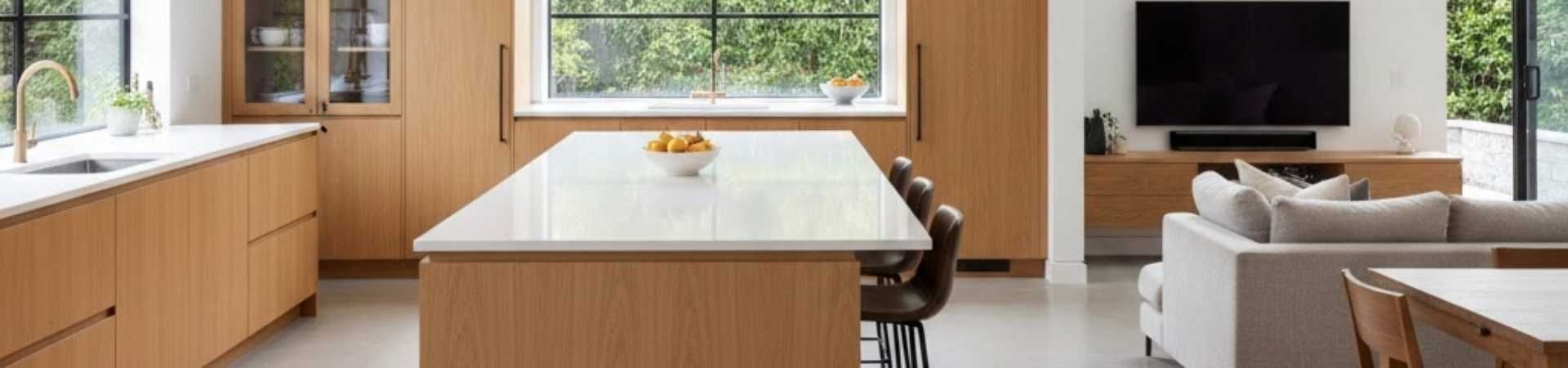
An open-concept kitchen is all about connection—between rooms, between people, and between everyday tasks. But if the cabinet layout isn’t thoughtfully planned, that open space can quickly feel chaotic. Traffic jams around the island, cluttered countertops that are visible from the living room, and awkward dead zones make it harder to cook, entertain, and relax. The good news: a smart cabinet layout can transform the way your open-concept kitchen feels and functions, guiding movement naturally and protecting the clean sightlines you love.
When our designers plan an open kitchen, we’re not just choosing door styles and finishes. We’re mapping out how you move through the space. Where do you drop groceries? Where do kids do homework? How often do you entertain? Cabinet placement—paired with islands, peninsulas, and tall storage—can turn one big room into a series of seamless, easy-to-use zones.
Designing for Natural Traffic Flow
In an open-concept layout, traffic shouldn’t cut straight through the main cooking zone. A good cabinet plan gently nudges people around, not through, your work area. That might mean:
- Positioning the refrigerator on the edge of the kitchen so snack-seekers don’t interrupt the cook
- Using an island to separate the cooking zone from the living area while keeping conversation open
- Placing tall pantry cabinets closer to the entry from the garage so groceries land in the right spot
By letting cabinets and islands “draw the lines,” you create intuitive pathways that feel natural to guests and family members, even if they’ve never been in your home before.
Using Cabinets to Shape Your Work Zones
Open-concept doesn’t mean one big empty box. The most successful spaces are divided into invisible zones: prep, cooking, cleanup, storage, and entertaining. Cabinets are the backbone of each zone.
Base cabinets with deep drawers near the cooktop can hold pots, pans, and utensils so everything is within reach while you cook. A run of cabinets near the sink becomes the cleanup zone, with pull-out trash, dishwasher, and storage for everyday dishes. On the seating side of the island, shallow cabinets can store placemats, games, or kids’ art supplies—making it easy to use the island as a true multi-purpose hub.
When every task has a home, the whole room feels calmer and more organized, even when everyone is using it at once.
Protecting Beautiful Sightlines
One of the best things about an open-concept kitchen is being able to see across the space—to the fireplace, TV, windows, or conversation area. Cabinet layout plays a huge role in whether those sightlines feel open or cluttered.
Lower, streamlined cabinets on the island keep your view open while still providing plenty of storage. Instead of wall-to-wall upper cabinets, mixing in open shelves or a few glass-front doors can create lighter moments that let your eye travel. Tall pantry or refrigerator cabinets are best placed on side walls or in “anchor” spots so they frame the room instead of blocking it.
Closed storage is just as important. Well-planned cabinets give you a place to hide countertop appliances, food packaging, and kids’ clutter so your open-concept kitchen looks as clean as it feels.
Creating Separation Without Walls
You don’t need walls to define where the kitchen ends and the living or dining area begins—your cabinetry can do that. An island with seating becomes a natural boundary line between cooking and relaxing. A hutch-style cabinet or buffet along the dining side can visually “finish” the kitchen while providing extra storage for serving pieces and linens.
These subtle transitions keep your space feeling open, but not shapeless. Each area has a purpose, and your eye understands where one zone ends and another begins.