Blog
2026 Bath Vanity Trends: Floating Cabinets, Tower Storage, Warm Woods, and More
Floating Cabinets, Tower Storage, and More
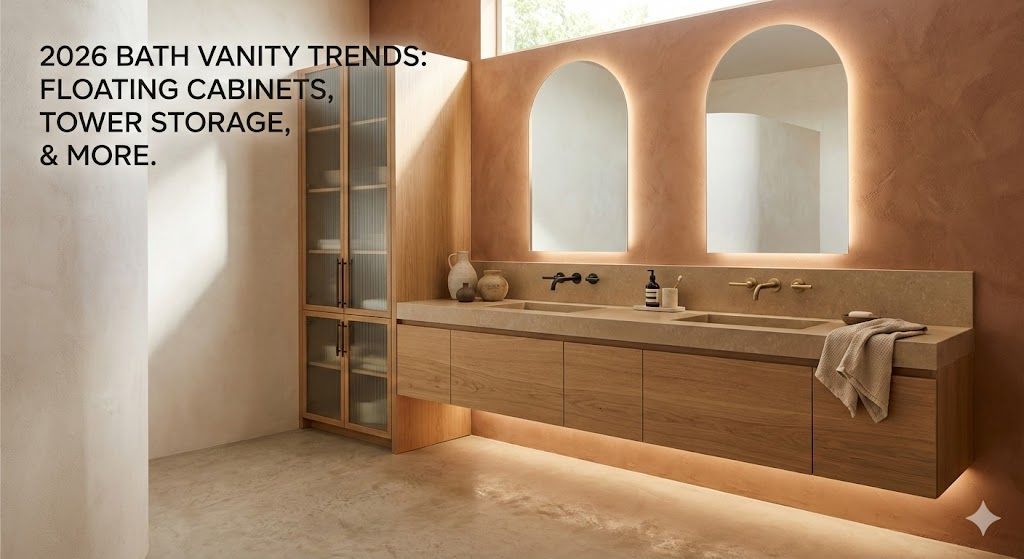
Bathroom design in 2026 is converging on a clear goal: make the vanity work harder while looking lighter, calmer, and more custom. Homeowners want fewer visual interruptions, more concealed storage, and finishes that feel intentional rather than “builder standard.” The vanity sits at the center of that shift. It’s the most used piece of furniture in the room, and it now carries the burden of storage, lighting, technology, and style—often in a tight footprint.
If you’re planning a remodel or simply gathering ideas, these 2026 bath vanity trends will help you prioritize what’s worth upgrading and what details will make your bathroom feel current for years.
1) Floating Vanities Keep Rising
Floating (wall-hung) vanities continue to gain market share in 2026 because they solve multiple design problems at once. Visually, they reduce bulk and make a bathroom feel larger. Practically, they create easy-to-clean floor space and open up options for under-vanity lighting.
The trend is evolving beyond the “single slab box” look. Expect more floating designs with furniture-like details: mitered edges, subtle reveals, integrated toe-kick lighting, and mixed materials that add warmth. The most popular installs pair floating cabinets with a slightly thicker countertop for contrast, or with a waterfall edge on one side for a more architectural silhouette.
Design note: floating vanities look best when paired with a clean, modern backsplash run and streamlined wall-mounted faucets. If you want the floating effect but need maximum storage, consider a higher cabinet height or adding adjacent tower storage (more on that below).
2) Tower Storage Is the New Must-Have
One of the strongest functional trends for 2026 is vertical tower storage—either as a tall cabinet beside the vanity or a slimmer “linen tower” integrated into the vanity run. This is the response to two competing homeowner demands: minimal countertops and more bathroom storage.
Tower storage allows you to hide daily clutter—hair tools, skincare, towels, backup toiletries—without expanding the vanity width. It also enables better zoning: top shelves for everyday items, middle shelves for grooming tools, and lower concealed storage for bulk supplies.
We’re also seeing more “appliance garage” concepts in bathrooms: a tower section with an interior outlet for charging toothbrushes, razors, or storing hair dryers out of sight. If you’ve ever wanted a clean counter but didn’t know where to put everything, tower storage is the 2026 answer.
3) Warm Woods and Natural Tones Replace Stark White
White vanities aren’t gone, but 2026 leans warmer and more organic. Expect to see natural oak, walnut, rift-sawn textures, and soft stains that read as calm and spa-like. The goal is warmth without heaviness—think light-to-medium wood tones paired with stone-look tops.
For painted options, designers are moving toward nuanced neutrals: mushroom, greige, clay, sand, soft black, and muted green/blue tones. These colors feel more “designed” and pair better with the mixed metals trend (brass, black, and soft nickel all in the same space—used intentionally).
4) Slab Fronts and Slim Shakers Dominate Door Styles
In 2026, vanity door styling favors clean geometry. Slab fronts remain the top choice for contemporary baths, especially when paired with integrated pulls or edge reveals. At the same time, Shaker isn’t disappearing—it’s refining. The “slim Shaker” (with narrower rails and stiles) is replacing the chunky, traditional Shaker look, offering a transitional style that reads modern without feeling stark.
If you’re remodeling for resale value, slim Shaker is often the safest bet: updated, but broadly appealing.
5) Integrated and Personalized Storage Accessories
The “cabinet interior” is getting more attention in 2026, and homeowners are asking for storage that’s purpose-built rather than generic drawers. Popular features include:
- Full-extension, soft-close drawers everywhere (even in smaller vanities)
- Drawer organizers for cosmetics and grooming tools
- Tilt-out trays used more selectively (often replaced by better drawer planning)
- Pull-out vertical organizers for hair tools
- Hidden toe-kick drawers for rarely used items
- Dedicated waste bins, including split bins for recycling
This trend is less about adding expensive gadgets and more about eliminating friction in daily routines. The best bathrooms feel effortless.
6) Countertops Go Thinner, With More Texture
Vanity tops in 2026 are leaning thinner and more refined. The heavy, thick edge is being replaced by slim profiles that pair well with floating cabinets and modern hardware. Material trends include quartz with softer veining, porcelain slabs for durability, and stone looks that feel less high-contrast and more natural.
For sinks, integrated (seamless) basins remain popular for easy cleaning. However, vessel sinks are returning in controlled ways—typically in powder rooms or design-forward spaces where the faucet and mirror are meant to be statement pieces.
7) Mixed Metals and Intentional Hardware
Hardware is shifting from “match everything” to “coordinate thoughtfully.” Matte black remains strong, but brushed brass and champagne bronze continue to grow—often paired with warmer woods. Polished chrome is still present, particularly in classic and cost-conscious remodels, but 2026 favors softer finishes that feel less shiny and more upscale.
Another change: hardware is becoming more minimal. Edge pulls, integrated channels, and tab pulls are replacing oversized bar pulls in many modern designs. The goal is clean lines without sacrificing usability.
8) Lighting and Mirrors Become Part of the Vanity System
In 2026, the vanity is less of a standalone cabinet and more of a complete grooming station. LED mirrors with adjustable color temperature, integrated defoggers, and layered lighting plans are being specified earlier in the design process—not as last-minute add-ons.
Under-cabinet lighting is also moving from “nice-to-have” to standard in mid-to-upper remodels, especially with floating vanities. It improves nighttime navigation and adds a premium feel without overwhelming the space.
Bringing It All Together
The defining vanity trends of 2026—floating cabinets, tower storage, warm materials, and smarter interiors—are not just style choices. They’re responses to how people actually live: wanting bathrooms that look calmer, clean easier, and store more without feeling crowded.
If you’re planning a remodel, start by deciding what matters most: maximum storage, a more open visual footprint, or a specific aesthetic direction (modern, transitional, classic). From there, the best results come from pairing a vanity style with the right storage plan and the right supporting details—lighting, hardware, countertop profile, and mirror selection.
Done well, the vanity upgrade is one of the highest-impact improvements you can make in a bathroom—and the 2026 trends make it easier than ever to build something that looks current and functions beautifully.