
Blog
Cabinets + Countertops + Lighting: A Coordination Guide That Prevents Expensive Mismatches
Service area: Cedar Rapids • Iowa City • Davenport • North Liberty
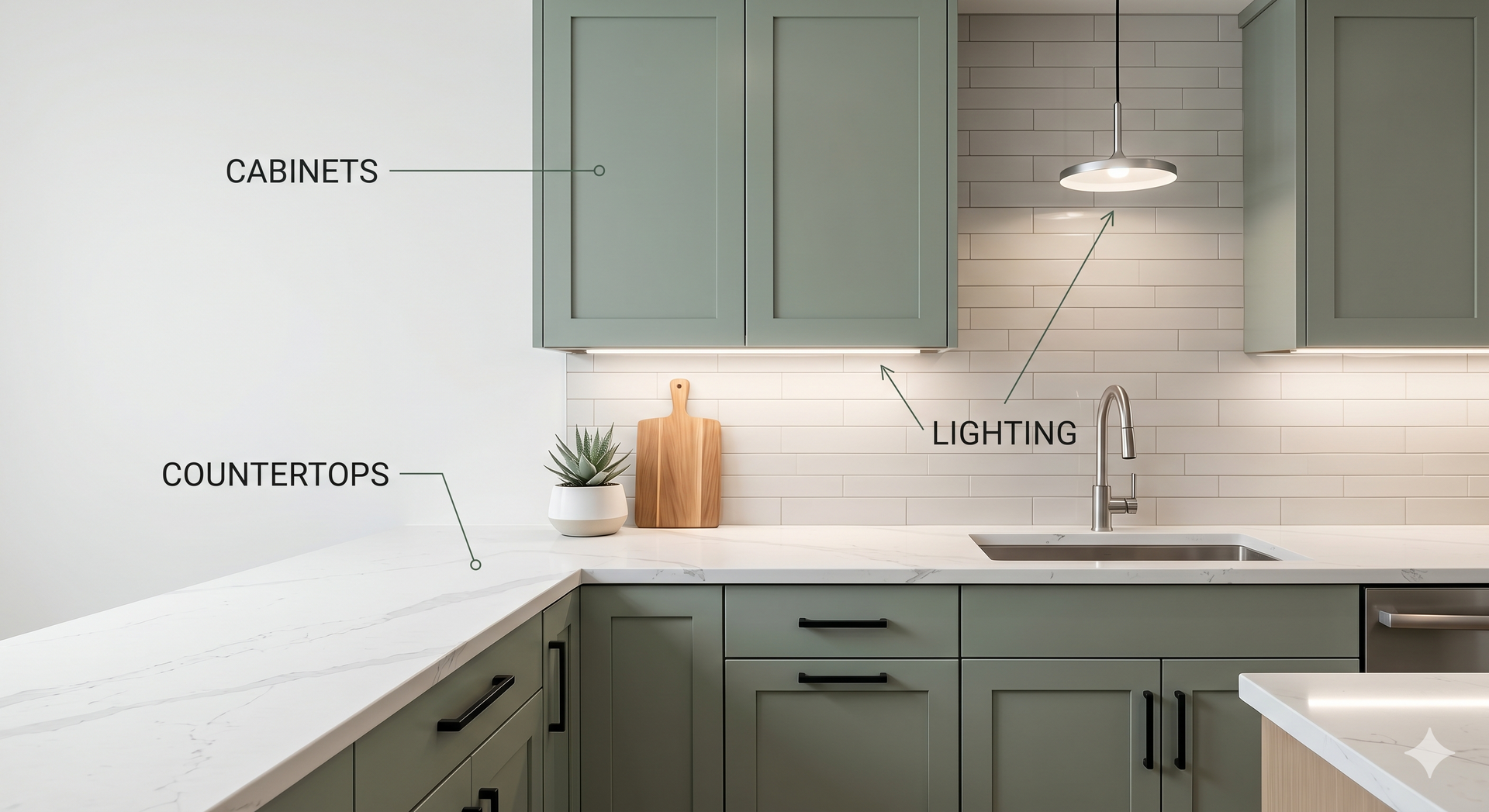
To avoid expensive mismatches, choose cabinets, countertops, and lighting as one coordinated system. Cabinets usually set the visual direction, countertops should support rather than overpower them, and lighting must be considered early because it changes how both materials look in the finished room.
Why this matters
One of the most common kitchen and bath planning mistakes is approving beautiful materials separately and expecting them to work together automatically. In reality, undertones, finish levels, pattern movement, and lighting conditions all interact.
A cabinet finish that looks warm and rich in a showroom can clash with a cool countertop at home. A white cabinet can shift under different bulbs. A heavily patterned top can overwhelm detailed cabinetry. These are not small issues. They can lead to dissatisfaction, change orders, and expensive revisions.
The right order of decisions
1. Choose cabinets first
Cabinets usually dominate the room visually. Their color, style, texture, and finish should establish the direction for the rest of the design.
2. Choose countertops second
Countertops should create balance. Some projects need contrast. Others need restraint. The right countertop is the one that strengthens the cabinet choice rather than competing with it.
3. Review lighting before approvals are final
Lighting changes perception. Recessed cans, pendants, under-cabinet lighting, and daylight all affect how cabinet and countertop colors read in the actual space.
Best coordination tips
Compare undertones, not just colors
Warm vs. cool matters more than “white,” “gray,” or “beige.”
Balance visual weight
If cabinets are detailed or heavily grained, quieter counters often work better. If cabinets are simpler, you may have more room for movement in the countertop.
View materials together
Do not approve one finish in isolation. Compare samples side by side with flooring, wall color, backsplash, and lighting direction in mind.
Think about function too
A coordinated room should not only look right. It should support how the kitchen or bath works every day.
Common mistake to avoid
The biggest mistake is treating lighting like a final accessory instead of a design variable. Lighting is what reveals the true relationship between cabinets, countertops, paint, backsplash, and hardware. If it is considered too late, the final room may not look the way it did in the decision phase.
KBD approach
At Kitchens By Design, we guide homeowners through coordinated kitchen and bath selections so cabinets, countertops, lighting, and surrounding finishes work together from the start. That process helps reduce uncertainty, protect budget, and create a more cohesive finished result.
FAQ (schema-style Q&A)
Q: Why should cabinets be chosen before countertops?
A: Cabinets usually occupy the most visual space in the room and establish the style, finish, and color direction for the rest of the design.
Q: How does lighting affect cabinet and countertop coordination?
A: Lighting changes how color, undertones, sheen, and texture appear. A material that looks right in one setting may read differently after installation under actual room lighting.
Q: What is the most common cause of an expensive material mismatch?
A: Choosing cabinets, countertops, and lighting separately instead of reviewing them together as one coordinated system.
Q: Should countertops match cabinets exactly?
A: No. They should complement the cabinets. Good design is about balance, not exact matching.
Q: What should homeowners compare when reviewing samples?
A: Compare undertones, pattern movement, sheen, texture, and how the materials look together under realistic lighting conditions.